
Full-time match markets frequently absorb excessive public attention, compressing margins on standard moneyline selections and obscuring actionable inefficiencies within shorter game segments. During Germany’s 2009–2010 Bundesliga season, aggregate final results routinely masked sharp splits in temporal performance, where select sides dictated the opening forty-five minutes with surgical precision before altering their tactical posture after the interval. Deconstructing how specific tactical structures engineered consistent early advantages enables sports bettors to bypass full-time variance and capture mispriced value across Half-Time (HT) result, spread, and derivative propositions.
The Structural Inefficiencies of Full-Time Bias in Modern Bookmaking
Odds compilers predominantly derive first-half proposition prices through algorithmic subdivisions of their primary full-time models rather than pricing the opening interval as an independent tactical entity. This mathematical shortcut assumes that a team expected to win over ninety minutes distributes its competitive superiority symmetrically across both halves. In real-world match conditions, however, tactical game plans, initial physical energy, and psychological approaches differ radically between the first whistle and the second-half restart.
When a dominant possession side faces an organized underdog, the favorite often expends significant physical output early to break down resistance, while reactive teams conserve energy for late counter-attacks. Retail markets regularly underprice first-half outrights for aggressive starting units because the broader public fixates on full-match accumulators. By isolating clubs that establish early game-state control through aggressive opening scripts, an observant bettor can target first-half moneyline and Asian handicap markets where the true realization rate comfortably outpaces the mathematical fraction derived from full-match lines.
Mapping Half-Time Performance Trends Across the 2009–2010 Campaign
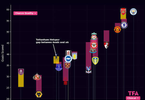
An empirical audit of the 2009–2010 Bundesliga season demonstrates that several clubs exhibited dramatic discrepancies between their standings at the half-time whistle and their eventual final table placements.
The compiled historical data highlights how distinct tactical models produced divergent interval profiles, revealing how early-tempo execution established reliable advantages across first-half wagering lines.
| Club | HT Record (W-D-L) | HT Goal Differential | FT Rank | Leading at HT Realization Rate | Primary Half-Time Market Takeaway |
| Bayer Leverkusen | 16-15-3 | +18 | 4 | 47.1% | Elite early pressing generated high-frequency first-half leads |
| Bayern Munich | 15-14-5 | +18 | 1 | 44.1% | Controlled opening territory; excelled on first-half Asian handicaps |
| Schalke 04 | 14-16-4 | +12 | 2 | 41.2% | Low-event defensive stability rewarded HT Draw and HT Win to Nil |
| Borussia Dortmund | 14-12-8 | +6 | 5 | 41.2% | Rapid counter-pressing created lucrative early home leads |
| Hamburger SV | 12-16-6 | +8 | 7 | 35.3% | Frequent early leaders that suffered severe second-half fatigue drops |
These recorded metrics demonstrate why treating the opening forty-five minutes as an isolated market yields superior pricing opportunities. Bayer Leverkusen led at the break in nearly half of their total fixtures, yet their fourteen full-time draws meant full-match moneyline wagers routinely collapsed late in games. Bettors who restricted their exposure to Leverkusen’s dominant first-half displays extracted consistent profits while completely bypassing the second-half defensive fatigue that repeatedly compromised Jupp Heynckes’ side across the final stretch of the season.
The Tactical Mechanics Behind Early Spatial Supremacy
Sustaining a high win rate across first-half betting options requires an analytical model that evaluates how a manager designs the opening twenty minutes of a contest. Teams that consistently lead at the break execute pre-planned attacking patterns against opponents still adjusting to match speed and spatial assignments.
Early High-Press Overloads and First-Phase Turnover Traps
Teams engineered for rapid starts deploy coordinated forward pressing triggers immediately from kickoff, compressing the opposition backline before passing channels normalize.
By pushing dynamic central midfielders into advanced half-spaces, the attacking side forces hurried clearances from uncomfortable defenders, winning second balls inside the opponent’s defensive third. This spatial dominance keeps the ball within thirty meters of the opposing goal throughout the first quarter-hour, drastically elevating the probability of securing an early conversion. Because lower-tier opponents typically set up in cautious low blocks designed to settle into a rhythm, an aggressive high-tempo assault often catches them off balance before tactical adjustments can be communicated at the interval.
Bayer Leverkusen and the Art of the Front-Loaded Campaign
Jupp Heynckes organized Bayer Leverkusen around an intense, front-loaded tactical framework during 2009–2010, featuring Toni Kroos pulling strings behind Stefan Kießling and Eren Derdiyok. Leverkusen’s strategy relied on overwhelming opponents with vertical combination play and high-intensity physical running straight from the opening whistle.
This stylistic commitment regularly overwhelmed opposing backlines before the thirty-minute mark, turning Leverkusen into one of the most reliable first-half sides in European football. However, maintaining that aggressive tempo proved unsustainable over full ninety-minute cycles, leading to repetitive second-half concessions. Backing Leverkusen on the first-half moneyline or first-half -0.25 Asian handicap eliminated the risk of their notorious late-game fading, capturing the peak value of their tactical design without absorbing their inevitable structural fatigue.
Quantitative Diagnostics for Half-Time Market Selection
Translating first-half tactical advantages into verified betting value requires executing an orderly analytical sequence to verify that early-goal indicators satisfy mathematical thresholds before risking capital.
[Isolate Candidate: High First-Half xG Production (>0.85)]
│
▼
[Verify Opponent Defensive Concession Rate in Mins 1–30]
│
▼
[Audit Tactical Profile: Proactive High-Press vs. Slow Starter]
│
┌────────────────┴────────────────┐
▼ ▼
[Calculated Edge Exceeds 3.5%] [Calculated Edge Below 3.5%]
│ │
▼ ▼
[Route to Half-Time Execution] [Discard: Insufficient Margin]
Implementing this screening process guarantees that prospective selections are underpinned by measurable structural trends rather than casual narrative. By checking early chance creation against opponent concession tendencies in the opening half-hour, the bettor confirms that the favorite possesses the tactical mechanisms required to break deadlocks early. If an otherwise superior team consistently exhibits a deliberate, probing approach in the opening period, the model rejects the wager, safeguarding capital against slow-starting sides.
Securing maximum equity in half-time markets demands access to execution channels that price split-half lines with minimal administrative margin. In scenarios where pre-match analysis reveals an undeniable opening mismatch, routing trades through a professional website guarantees competitive odds across alternative first-half spreads; utilizing a specialized sports betting destination such as ufa168 enables value-focused bettors to capture fractional lines like HT -0.25 or HT Team Totals before retail volume pushes the numbers to unviable levels. Capturing these marginal pricing advantages is what determines whether an early-tempo analytical strategy generates consistent long-term portfolio growth.
Situational Failure Modes in Half-Time Handicapping
Even clubs with exceptional first-half profiles encounter specific situational conditions where early dominance fails to materialize on the scoreboard. An analyst must remain aware of systemic interruptions that disrupt an attacking team’s opening tempo.
- Early Low-Block Resistance: Opponents that deploy an ultra-defensive 5-4-1 formation specifically designed to waste time early frequently drag opening halves into scoreless stalemates.
- Adverse Pitch Conditions: Heavy rain or frozen ground common during German winters slows ball circulation, directly hampering technically superior passing teams in the opening periods.
- Severe Rotational Absences: Resting a primary playmaker or central progressive passer destroys the fluidity required to execute complex opening pressing traps.
- Early Whistle Disruption: Overly strict match officials who break up early physical contests with frequent soft fouls disrupt attacking rhythm, aiding the defending underdog.
Evaluating these external factors prevents an analyst from blindly trusting aggregate first-half trends. When a high-tempo squad encounters conditions that slow match velocity, the probability of a 0-0 half-time scoreline rises sharply, requiring the bettor to pass on the selection or pivot toward alternative unders.
Psychological Composure and Mitigating Short-Interval Volatility
Wagering on forty-five-minute segments compresses the operational timeframe, which naturally heightens variance since a single refereeing error or isolated counter-attack carries a larger proportional impact than it would across a full match. When a dominant side creates multiple high-quality opportunities only to reach the interval locked in an unlucky 0-0 draw, an undisciplined bettor often experiences immediate emotional irritation.
This acute frustration frequently tempts an unanchored participant into abandoning rigorous athletic analysis altogether. Reeling from an unlucky half-time result, an undisciplined bettor might instinctively seek immediate financial relief by visiting a high-speed betting destination featuring non-stop table action; replacing calculated sports modeling with fixed negative-expectation casino games inevitably compounds the initial loss and dismantles bankroll governance. Long-term profitability requires treating short-half variance as an unavoidable operational cost, maintaining absolute psychological detachment between strategic football handicapping and recreational chance.
Summary
The 2009–2010 Bundesliga season highlighted the strategic advantage of analyzing football through distinct temporal intervals rather than relying exclusively on full-time outcomes. Clubs like Bayer Leverkusen proved that intense, front-loaded tactical approaches could produce exceptional half-time records that completely outstripped their eventual full-match conversion rates.
Exploiting these early-match trends requires evaluating spatial pressing mechanics, verifying chance creation in the opening thirty minutes, and executing trades through low-margin channels that offer flexible first-half lines. By targeting the opening forty-five minutes as an independent tactical battleground, an analytical bettor avoids late-game rotational fatigue and extracts substantial value from bookmaker models that chronically oversimplify match flow.