Introduction
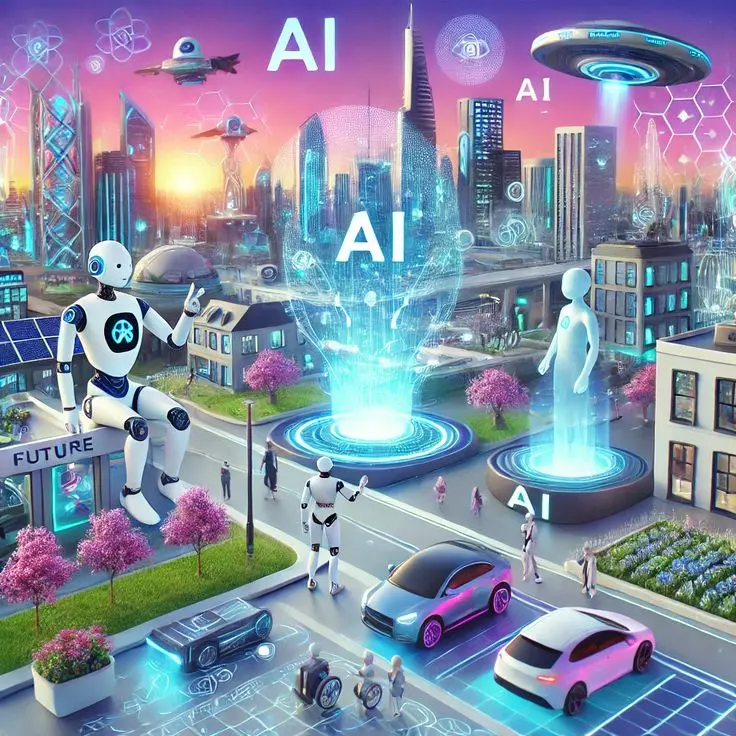
The future of AI technology is one of the most talked-about topics in today’s digital world. From smartphones and smart homes to healthcare and education, artificial intelligence is changing how we live and work. What once sounded like science fiction has now become part of everyday life. AI tools help people save time, improve accuracy, and make better decisions across many industries.
As technology continues to evolve, the future of AI technology looks even more powerful and influential. Businesses are using AI to automate tasks, students are using it for learning support, and doctors rely on it for faster diagnosis. Governments and organizations are also investing heavily in AI research to stay competitive in the global market.
However, with great power comes great responsibility. While AI offers many benefits, it also raises questions about job security, privacy, and ethical use. Understanding how AI works and where it is heading is essential for anyone who wants to stay relevant in the modern world.
This article explains the future of AI technology in simple words. You will learn what AI is, why it matters, how it will develop step by step, its benefits, risks, common mistakes, expert tips, and answers to common questions. Whether you are a student, professional, or business owner, this guide will help you understand AI clearly and confidently.
What is Future of AI Technology?
The future of AI technology refers to how artificial intelligence will grow, improve, and impact human life in the coming years. AI is a branch of computer science that allows machines to learn, think, and make decisions like humans. It uses data, algorithms, and machine learning to perform tasks without constant human input.
In the future, AI will become more intelligent, more accurate, and more human-like. It will not only follow instructions but also understand emotions, predict outcomes, and solve complex problems. Technologies like machine learning, deep learning, natural language processing, and robotics will continue to evolve.
AI will move beyond simple automation. It will help in decision-making, creativity, medical research, climate prediction, and even space exploration. Smart assistants will become smarter, self-driving cars will become safer, and virtual teachers will become more personalized.
The future of AI technology is not about replacing humans. Instead, it is about working alongside humans to improve productivity, reduce errors, and create new opportunities. AI will act as a powerful tool that enhances human abilities rather than replacing them completely.
Why is Future of AI Technology Important?
The future of AI technology is important because it affects every part of society. From businesses to education, from healthcare to entertainment, AI is becoming a core technology that shapes progress.
One major reason AI is important is efficiency. AI can process large amounts of data in seconds, something humans cannot do easily. This helps organizations make faster and more accurate decisions.
Another key reason is innovation. AI opens doors to new inventions and services that were not possible before. For example, AI-powered medical tools can detect diseases early, saving lives.
AI also plays a big role in economic growth. Companies that use AI gain a competitive advantage by reducing costs and improving customer experience. Countries investing in AI development are more likely to lead in technology and innovation.
Moreover, AI helps solve real-world problems such as climate change, traffic management, and disaster prediction. With the right policies and ethical use, the future of AI technology can create a smarter and more sustainable world.
Detailed Step-by-Step Guide to the Future of AI Technology
Step 1: Data Collection and Processing
The first step in AI development is collecting data. AI systems learn from data, so high-quality data is essential. This data can come from websites, sensors, images, videos, or user interactions.
Once collected, the data is cleaned and organized. This process removes errors and irrelevant information. Clean data helps AI models learn better and produce accurate results.
Step 2: Machine Learning Development
Machine learning is the core of AI. In this step, developers train AI models using algorithms. The system learns patterns from data and improves over time.
There are different types of machine learning, such as supervised learning, unsupervised learning, and reinforcement learning. Each type is used for different purposes, depending on the task.
Step 3: Deep Learning and Neural Networks
Deep learning uses neural networks that work like the human brain. These networks have multiple layers that process information in stages.
This step is responsible for advanced AI features such as image recognition, speech recognition, and language translation. It plays a major role in the future of AI technology.
Step 4: Integration with Real-World Applications
Once AI models are trained, they are integrated into real-world systems. This includes mobile apps, websites, machines, and software platforms.
For example, AI chatbots are used in customer service, while AI algorithms help recommend products on shopping websites.
Step 5: Continuous Learning and Improvement
AI does not stop learning after deployment. It continues to improve by analyzing new data and feedback. This makes AI systems smarter and more accurate over time.
Benefits of Future of AI Technology
- Improves efficiency and productivity in businesses
- Reduces human errors and increases accuracy
- Saves time by automating repetitive tasks
- Enhances decision-making using data analysis
- Supports healthcare with faster diagnosis
- Improves customer experience through personalization
- Helps in education with smart learning tools
- Encourages innovation and creativity
- Assists in solving global challenges
- Creates new job opportunities in technology
Disadvantages / Risks of Future of AI Technology
- Job displacement due to automation
- High development and maintenance costs
- Data privacy and security concerns
- Risk of biased decision-making
- Dependence on machines
- Ethical issues related to surveillance
- Lack of human emotions and judgment
- Cybersecurity threats
- Misuse of AI for harmful purposes
- Unequal access to AI technology
Common Mistakes to Avoid
Many people misunderstand the future of AI technology and make common mistakes that lead to confusion or fear.
One major mistake is assuming AI will replace all human jobs. In reality, AI will create new roles while changing existing ones.
Another mistake is ignoring data security. AI systems rely heavily on data, and poor security can lead to serious risks.
Some businesses also rush into AI adoption without proper planning. This often results in wasted money and poor performance.
Overreliance on AI is another issue. Human judgment is still important, especially in sensitive areas like healthcare and law.
Lastly, ignoring ethical concerns can harm users and damage trust. Responsible AI development is essential for long-term success.
FAQs
1. What is the future of AI technology in simple words?
The future of AI technology means smarter machines that can help humans in daily life, work, healthcare, and education by learning and making decisions.
2. Will AI replace human jobs?
AI will replace some repetitive jobs but will also create new opportunities. Humans will still be needed for creativity, leadership, and decision-making.
3. How will AI affect education?
AI will personalize learning, provide virtual tutors, and help teachers track student progress more effectively.
4. Is AI safe for the future?
AI can be safe if used responsibly with proper rules, security, and ethical guidelines.
5. What industries will benefit most from AI?
Healthcare, finance, education, manufacturing, marketing, and transportation will benefit the most from AI.
6. How can beginners prepare for the AI future?
Beginners can learn basic digital skills, understand AI concepts, and stay updated with technology trends.
Expert Tips & Bonus Points
- Always focus on learning skills that work alongside AI
- Stay updated with new AI tools and trends
- Use AI to improve productivity, not replace thinking
- Understand basic data literacy
- Follow ethical practices when using AI
- Encourage human-AI collaboration
- Invest in continuous learning
- Choose AI solutions that solve real problems
- Test AI systems before full implementation
- Keep user privacy a top priority
Conclusion
The future of AI technology is bright, exciting, and full of possibilities. AI is no longer a distant concept; it is already shaping the way we live, work, and communicate. From healthcare to education, from businesses to daily life, AI is becoming an essential part of modern society.
As AI continues to evolve, it will bring both opportunities and challenges. Those who understand and adapt to this change will benefit the most. The key is to use AI responsibly, ethically, and wisely. Instead of fearing AI, people should learn how to work with it and use it as a tool for growth.
The future of AI technology depends not only on machines but also on human choices. With proper knowledge, strong ethics, and continuous learning, AI can create a smarter, safer, and more efficient world. By staying informed and prepared, anyone can become a part of this exciting technological journey.